
A structured approach for plant-wide PID tuning
by Sam Dhaliwal
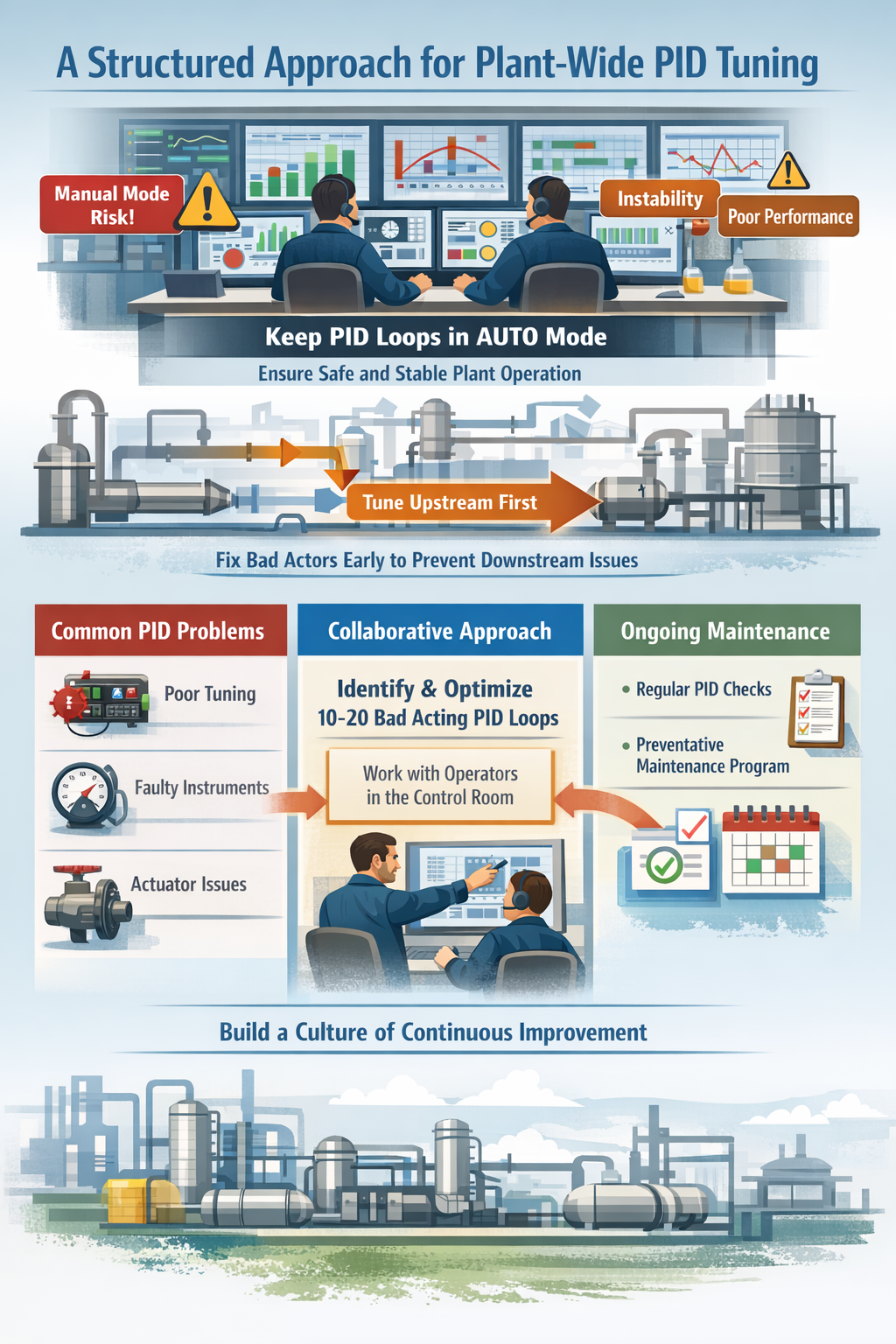
PID loops need to be in good working order and maintained in AUTO mode. Plant safety may be compromised if some of these PID loops are kept in manual mode. Incorrect and sub-optimal PID tuning will also contribute towards poor plant performance, leading to instability and reduced profitability. A culture of continuous PID performance monitoring and improvement will ensure safe and optimal plant performance. How do you structure PID tuning across your plant?
How and where do you start?
Poor PID loop performance could be due to various factors such as one or more “bad actors” that impact overall plant performance. Sub-optimal PID tuning, instrument failures and actuator issues are some other considerations. Sometimes PID loops are configured incorrectly, this will also require attention. How should you address these issues so that you optimise PID tuning across your entire plant?
The best approach is to follow the process flow and start tuning at the beginning of the process. This is because any bad actors upstream will pass on instabilities to downstream flow, temperature and pressure measurements, impacting overall plant stability.
A culture of steady improvement and maintenance
Building confidence by improving performance of a few important PID loops is an excellent way to get started. Identify 10 to 20 bad acting PID loops that require urgent attention and tackle them in the first phase of activities. You should review, tune and optimise these PID loops in the first instance, starting with the loops at the front of the plant. This work should be conducted in the control room, with operator interactions. This type of collaborative approach fosters trust with operators and builds their confidence in engineer skills. Often operators will provide additional information and history regarding problematic loops to engineers, this is valuable information that can be considered while undertaking the tuning activities. Once there is proven success, additional PID loops can be addressed, until all bad-acting PID loops have been rectified. Showing good results will create interest in PID optimisation activities and lead to a culture of continuous improvements. Regular monitoring and maintenance of PID loops should be scheduled to prevent any poor performing loops from propagating instabilities throughout the plant.
Develop a culture of regular maintenance
It is essential to develop a regular maintenance schedule for PID tuning. This will generate excellent payback in the form of stable plant operation and improved performance. Operators will be able to use the full capability of PID loops and keep them in AUTO mode, reducing the risk of process upsets or more severe incidents. Creating a programme of monthly checks shall ensure PID loops continue to perform optimally. More importantly, a culture of preventative maintenance will be developed which can be carried forward by future managers and engineers. Operations managers will have peace of mind and there will be reduced stress on operators.