
Are soft skills understated?
We learn a language at school but do not learn how to apply it effectively in a work place. Further education gives us the ability to understand complex concepts and solve difficult problems and sometimes how to speak in front of an audience. Most of the time we do not learn how to deal with people and the importance of that in our work life. My Engineering career over the last 33 years has given me some insights that have changed my view of the skills needed to navigate a career and for that matter, life. Soft skills matter more than what we think.
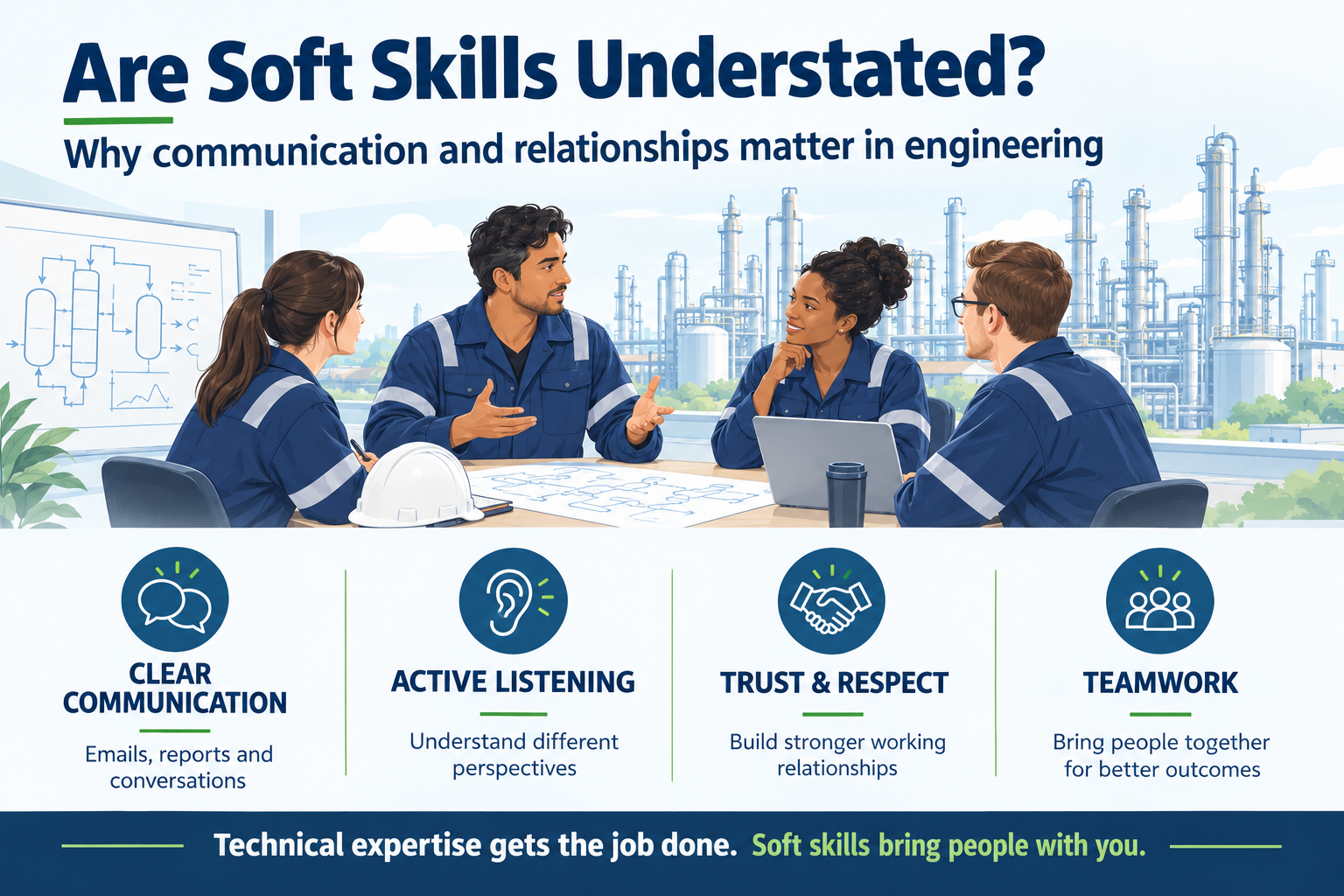
What are soft skills?
I like to think of soft skills as your communication and behaviour with others. This applies to work and equally to your personal life. Good communication skills are paramount. The areas that are important and not taught, are written communication such as emails, messages, reports and presentations. Being clear, concise, factual and keeping emotion out of emails and messages is important. Behaviours that will help you navigate business and personal relationships well are good listening skills, being respectful, trustworthy, punctual, good timekeeping and honesty.
Understanding the importance of these skills and recognising that you should evolve and improve these skills will help you along a journey of self-realisation and career success. Spend half your “training time” thinking about improving your soft skills.
It is all about people and relationships
The foundation of our relationships, both professional and personal, is based on our behaviour towards the people we interact with. Our behaviour is partly driven by soft skills and other factors such as temperament, psychological make up etc. Communicating with clarity in the workplace will help brings teams together, minimise misunderstanding and provide a collective sense of achievement. Team morale is impacted positively when meetings are a forum for all to share their views respectfully.
Honesty in all relationships creates trust. Contrary to what most people think, honesty is appreciated by most, even if the message is not to their liking. Whilst it is true that “not everyone likes everyone” having good soft skills will enable you to have a meaningful and productive interaction with people who you may not get along with in a professional environment. Our mind starts creating impressions of people in the first few moments of our initial meeting with them. Good soft skills will enable you to navigate that first interaction and leave a good image of yourself with the other person.
Leadership styles vary but it is generally true that leaders who have good soft skills will have a better chance of creating a thriving environment for their employees so they can flourish and give their best to their organisation.
Benefits for all
As a young engineer, my focus was on delivering my best from a technical perspective. I soon realised that adoption of my technical solution had more to do with the people using it than the quality of the technical solution. I used my soft skills (people skills) to explain, train and reassure people of the solution and most importantly, include all key stakeholders in discussions. Using this inclusive approach, along with good soft skills resulted in excellent team work and benefits for all involved in that activity.